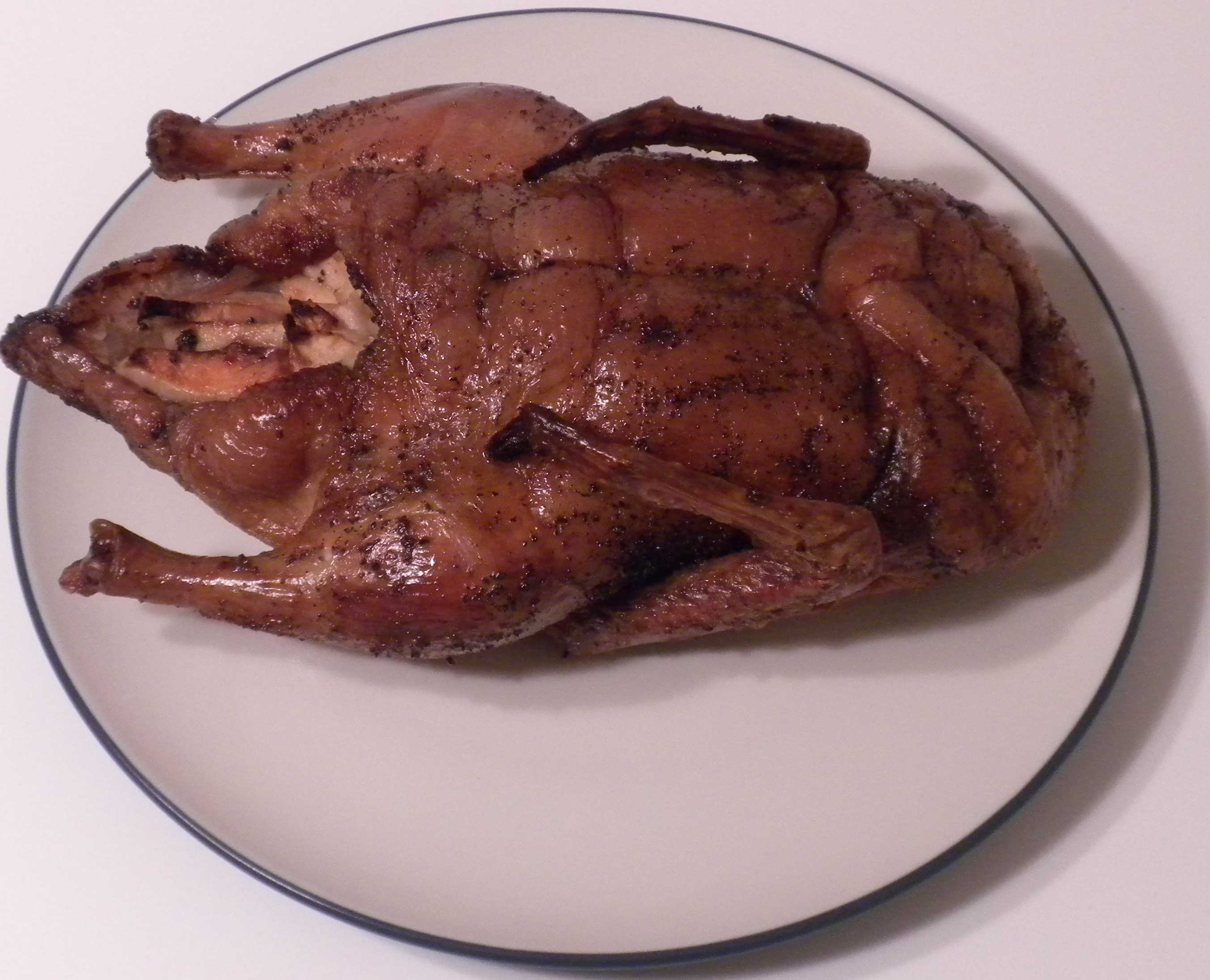
This delicious roast duck is perfect for winter.
Our ancestors usually ate their food in season. This did not just apply to fruits and vegetables, but also to meats which were available all year round. In Europe and America, this used to mean that a great deal of animal fat was eaten during the winter. In fact, the people who lived in cold climates, all over the world, prized animal fat and ate a great deal of it when the weather was cold. This enabled people to survive and thrive in some very cold climates, even within the arctic circle.
This was not just done for cultural reasons, but because of an important fact I just learned for myselfanimal fat makes winter bettermuch better.
The Problem with Winter
Cold weather had always been difficult for humans. In fact, many people counted winters rather than years when describing someones age. To these people, surviving the winter was a real accomplishment. It has been more common for people to get sick and die during a cold winter. There are several reasons for this. There is little sunlight, which means much less Vitamin D. Vitamin D is crucial for the proper functioning of the immune system. The cold is a strain on the body, which is made worse by rain and snow, much worse by freezing weather and blizzards. Most people just try to stay warm and dry.
But our ancestors did not consider shelter to be enough. They had another remedy for winter that was very important to themanimal fat.
Traditional Winter Foods
Many European peoples would eat fattier foods during winter. Even the game they hunted put on fat for the winter, so older, fatter animals were prized at that time. Rich pork dishes from fat pigs, using lard and the skin, were winter favorites. Fatty lamb roasts and stews were a winter favorite. In fact, every kind of meat stew was made in winter, always with plenty of animal fat. Geese and ducks were usually eaten during the winter, because of the fat they carried. Winter was the most likely time for people to have meat, and many animals were slaughtered and salted, often in the form of hams or fat sausages, in preparation for winter.
All of this animal fat was pastured, as factory foods did not exist at this time.
In old Russia, fat foods for winter were so prized that poems were written about them, praising the virtues of the various kinds of fat, including lamb fat, beef fat, butter, and the favorite, real pork lard.
Eating animal fat during winter was considered vital for health. Unfortunately, many people were too poor to afford enough fat and fatty meats, and were unable to get the benefits. But for those who could afford it, fatty meats and animal fat played a crucial role in winter survival.
The Benefits of Winter Fat
The benefits of good animal fat have been documented by the Weston A. Price Foundation, as shown in this excellent article The Skinny on Fats.
Pastured animal fats are particularly valuable in winter because they are rich in Vitamin D, especially the fatty organ meats, and butter. Pastured animal fats are wonderful fuel for the body, providing perhaps the best source of energy, with none of the negative effects of sugar or too many carbs. This helps the body to function better.
Recently we were hit with a spell of unusually cold weather, and I decided to up our intake of real animal fats. We ate fatty roasts and stews, used more real lard, butter, beef tallow, and other such fats, and enjoyed fatty ducks and organ meats. The results of this experiments is that my energy increased, and I felt strong and eager for the work of the day. The tiredness I might feel from the cold and gloom disappeared with a nice bowl of fatty stew, or hot broth made from real bones and meat scraps.
This is just my experience, but it helped me to understand why my European ancestors valued fat in the winter so much.
Animal Hibernation Information eHow.com The slowing of the body and decrease in temperature allows the animal's stored fat to last longer. ... Winter is an interesting time in the animal kingdom. Animals in winter - hibernation, migration, hibernate, migrate ... They use this fat for energy while hibernating. Some ... If an animal lives in an area where the winter is mild, it may hibernate only briefly, or not at all. Animals in Winter - Home - Welcome to Charter.net observe how a layer of fat and fur help to keep animals warmer in winter. Literacy. ... students illustrate each animal in its winter home. Extension Winter Limitations of Biodiesel made from Used Oil or Animal Fat Biodieseltec.de - Biodiesel Process Technology ... Every vegetable oil and animal fat can be used for the transesterfication to get biodiesel. Where Do Animals Go in Winter? -- Exploring Nature Educational ... Hibernation is when an animal goes into a deep sleep. The heart beat and breathing slows down. The body cools down. ... to have enough fat stored for winter. 2. How do animals stay warm in winter? - Planet Science How do animals stay warm in winter? It's cold outside. How do animals keep warm? ... Fat helps to keep the animal's body heat inside the animal. Hibernation - ThinkQuest The animal will use up the body fat it stores and not lose ... This is how the animal makes it through the whole winter on the fat it has stored in its body. ... Animals that Hibernate When it undergoes hibernation, the animal uses this fat to survive the chilling days. ... the bear utilizes the stored fat till the winter is over. feeding chickens animal fat in the winter months?? Can someone please tell me, I saw this on other threads that in the cold temps you can feed chickens animal meat/fat?? Is this true? I've always assumed no scraps... EEK! - Snug in the Snow - Hibernation Story Others get ready for winter by putting on a thick coat ... close to an animal's organs (brain, liver). Brown fat works fast to deliver quick energy to an animal coming ...
